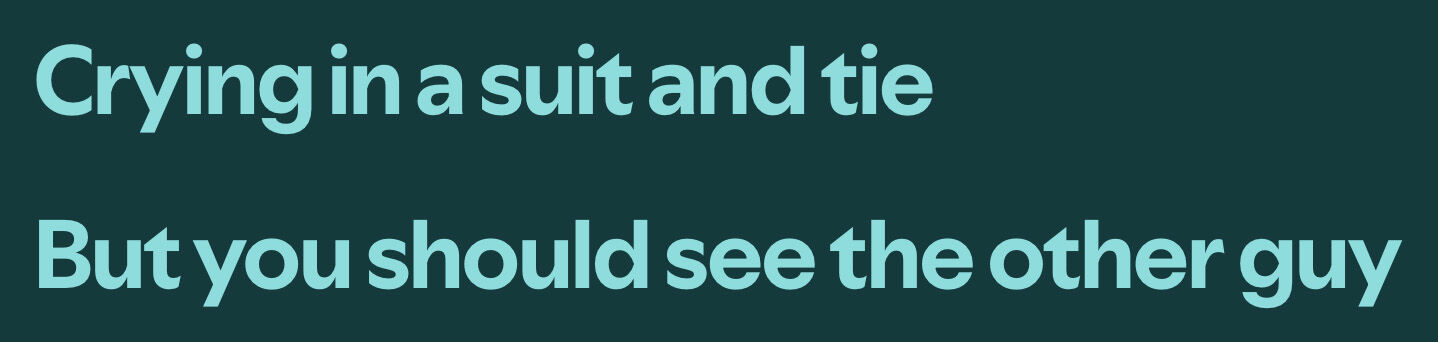
Listening to an episode of Switched on Pop about Phoebe Bridgers and her latest album, the hosts discuss the album opening verse “Crying in a suit and tie” (she famously wears suits on stage) followed by “But you should see the other guy.” They talk about how she’s moving away from being literal in her lyrics and creating layers of meaning... the fans are eating it up, reposting the lyrics and unpacking all the references.
That made me think of multiple things at the same time: memes, Black Twitter, Backrooms the movie, larping...! Completely unrelated on the surface but all “interesting” for being layered like an onion.
People find that unpacking very interesting. They have to do a little mental work to connect the dots and get to that satisfying aha moment. The recent work by David Nottoli and Jeffre Jackson on interestingness has given me a fresh lens for observation.
But why aren’t we taking advantage of that? We’re moving in the opposite direction, over-explaining everything until there’s nothing left for anyone to unpack. When did bare bones become interesting?
The fact that everything is standardized, modular and coded in the US is still a pretty big culture shock for me. I come from a developing country. And truth be told, it took me a couple of years to understand the why: efficiency, lower cost, better margins, more profit… Well, it was my first time living in a capitalist system, how naive!
First I saw coding in physical spaces, tangible things, objects, buildings, urban planning, events… it took me a few more years to see coding in intangible environments. It was coding but from a slightly different angle. Here’s how it worked: identify success, find patterns, codify and develop the formula, read best practice.
There are some that may ask, if everyone follows the best practice, doesn’t it make it kind of counterintuitive? If those success stories behind the best practices led to a competitive advantage in the market, doesn’t it go away when everyone is following the same formula?
Others may say, following best practices is less about replicating success and more about “pass-through accountability,” you know, like when things happen but no one in the organization actually makes any decisions!
It’s either the consumer research, platform best practices, data-backed agency reco or a deck from one of the big five that led to the decision. Shaggy said it best: “it wasn’t me.”
I’m not saying any of those things (see what I did there?)... my question is, what if we’re looking at the wrong patterns to code? What if we’re measuring the wrong things? What if we’re looking at the wrong examples?
The truth is, people still encounter interesting things everyday, just not in advertising, because we’ve optimized the “interestingness” out of it.